
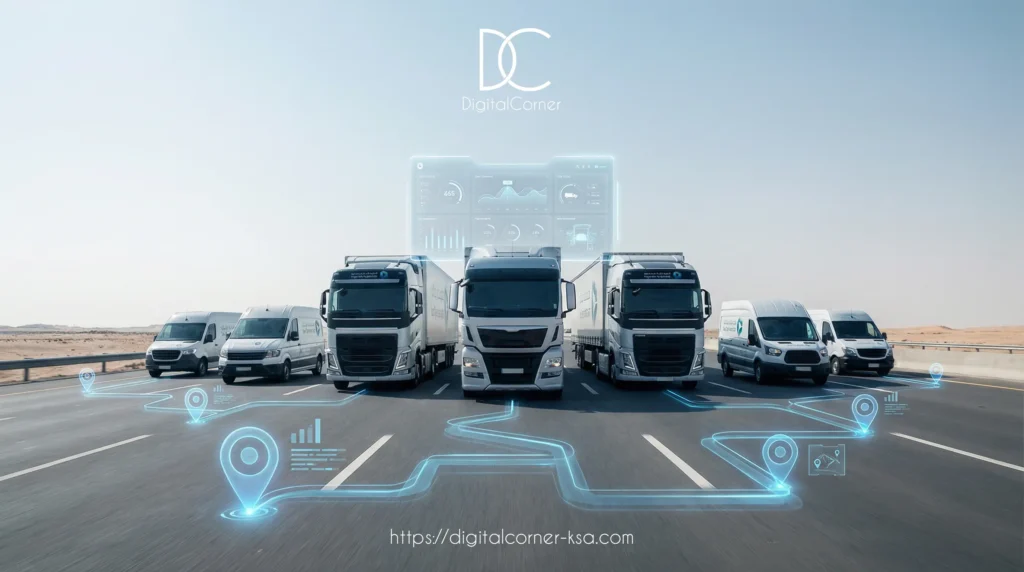
Vehicle tracking systems in Saudi Arabia have become essential tools that companies rely on to manage fleets, improve operational efficiency, reduce costs, and support compliance with regulations and governing authorities.
With the wide range of available solutions, many decision-makers face challenges in understanding the differences between tracking systems and selecting the most suitable option for their business needs.
In this comprehensive guide, we explain what vehicle tracking is, how it works, its types, benefits, and the difference between traditional GPS tracking systems and advanced fleet management systems—helping you make an informed decision based on clear understanding.
Table of Contents
What Is Vehicle Tracking?
Vehicle tracking is a technological system that enables real-time visibility of vehicle locations and movements using positioning and communication technologies, while also recording operational data to analyze vehicle and driver performance.
Vehicle tracking is not limited to location visibility only. Depending on the system used, it may also collect data such as:
-
Speed
-
Routes
-
Stops
-
Fuel consumption
-
Maintenance schedules
-
Operating hours
-
Driving behavior
How Does a Vehicle Tracking System Work?
A vehicle tracking system typically relies on three main components:
Tracking Device
Installed inside the vehicle to collect location and movement data.
Communication Network
Securely transmits data from the vehicle to the central system.
Management Platform
A digital dashboard that displays data, reports, and alerts, enabling fleet monitoring and decision-making.
The integration of these components allows continuous monitoring and performance analysis of the fleet.
Types of Vehicle Tracking Systems in Saudi Arabia
Vehicle tracking systems vary based on complexity and functionality. The most common types include:
GPS-Based Vehicle Tracking Systems
These systems focus on tracking location and basic data such as speed and routes. They are commonly used for:
-
Tracking a limited number of vehicles
-
Basic operational needs
-
Individual or small-scale usage
Satellite-Based Vehicle Tracking Systems
Used in environments where reliance on terrestrial networks is difficult, such as remote areas. They provide wider coverage under special operating conditions.
Advanced Fleet Management Systems
These are integrated systems that use tracking as a foundation and add advanced management and analytics layers, including:
-
Advanced operational reports
-
Driver management
-
Driving behavior monitoring
-
Integration with other systems
-
Regulatory compliance support
Difference Between Traditional GPS Systems and Advanced Fleet Management Systems
Understanding the difference between these two types is essential when choosing the right solution.
Traditional GPS Systems
-
Primarily focused on location tracking and basic operational data
-
Provide limited reports and alerts
-
Suitable for simple use cases or small fleets
-
Do not cover full operational management needs
Advanced Fleet Management Systems
-
Use tracking as part of a comprehensive management ecosystem
-
Provide deeper data analytics
-
Support operational optimization and decision-making
-
Enable driver, maintenance, and safety management
-
Suitable for companies managing operational fleets
In simple terms, tracking is the foundation, while fleet management expands this foundation into a complete operational management tool.
Benefits of Vehicle Tracking for Businesses
Companies benefit from vehicle tracking systems in several ways, including:
-
Improved fleet management efficiency
-
Reduced operational costs
-
Optimized route planning
-
Enhanced safety levels
-
Driver performance monitoring
-
Accurate data for decision-making
These benefits increase as the system becomes more integrated and advanced.
Vehicle Tracking and Regulatory Requirements in Saudi Arabia
In certain sectors in Saudi Arabia, vehicle tracking systems play an important role in supporting compliance with regulatory requirements issued by authorities such as the Transport General Authority.
Choosing the right system helps companies to:
-
Prepare fleets for electronic integration
-
Provide reliable operational data
-
Reduce regulatory risks
-
Ensure business continuity
How to Choose the Right Vehicle Tracking System
Before selecting a vehicle tracking system, it is recommended to answer the following questions:
-
Do you need basic tracking or a fully integrated fleet management system?
-
How many vehicles are in your fleet?
-
Does your operation require advanced operational reports?
-
Do you need regulatory compliance support?
-
Is the system scalable for future growth?
Answering these questions helps identify the most suitable solution without unnecessary complexity or cost.
Why Choose Digital Corner for Vehicle Tracking Solutions?
Digital Corner provides customized vehicle tracking solutions for businesses in Saudi Arabia, with a focus on:
-
Deep understanding of the local market and regulatory environment
-
Certified and Transport General Authority–compliant solutions
-
Dedicated 24/7 technical support for businesses
-
Scalable and customizable systems based on fleet size and type
-
Easy access to Digital Corner systems without replacing existing hardware
-
Integration with safety and fleet management solutions
The goal is to enable companies to manage their vehicles more efficiently while maintaining full compliance.
Who Benefits from Vehicle Tracking Systems?
Vehicle tracking systems are widely used across various sectors, including:
-
Transportation companies
-
Delivery companies
-
Logistics services
-
Car rental companies
-
Businesses managing operational fleets
The value and application vary depending on business nature and fleet size.
Frequently Asked Questions About Vehicle Tracking
Is vehicle tracking limited to location visibility only?
No. Tracking systems provide operational data that can be used to analyze performance and improve management.
Are tracking systems suitable for small businesses?
Yes, when a flexible system is chosen that matches the fleet size.
Are all tracking systems the same?
No. Systems differ in capabilities, analytics depth, and integration level.
Does vehicle tracking help reduce costs?
Yes, by optimizing operations and minimizing operational waste.
Conclusion
Vehicle tracking is a fundamental component of modern fleet management in Saudi Arabia. With the variety of available solutions, understanding the difference between basic tracking systems and advanced fleet management platforms helps companies select the right solution for their operational and regulatory needs.
This guide serves as a starting point for gaining a comprehensive understanding of the field and can be built upon to select and implement the most effective solution.
Would you like to know which system is best for your company’s fleet?
You can request a free consultation from the Digital Corner team to help you choose a vehicle tracking solution that aligns with your operational requirements.